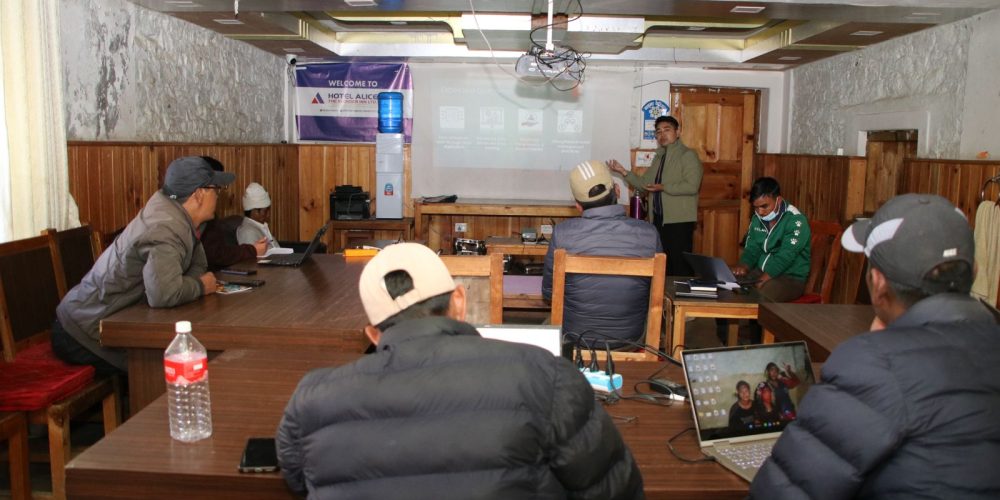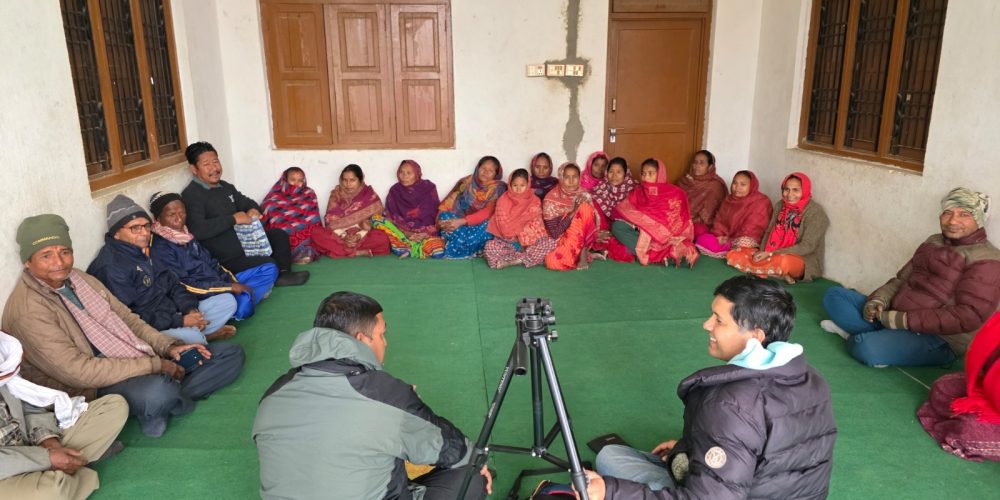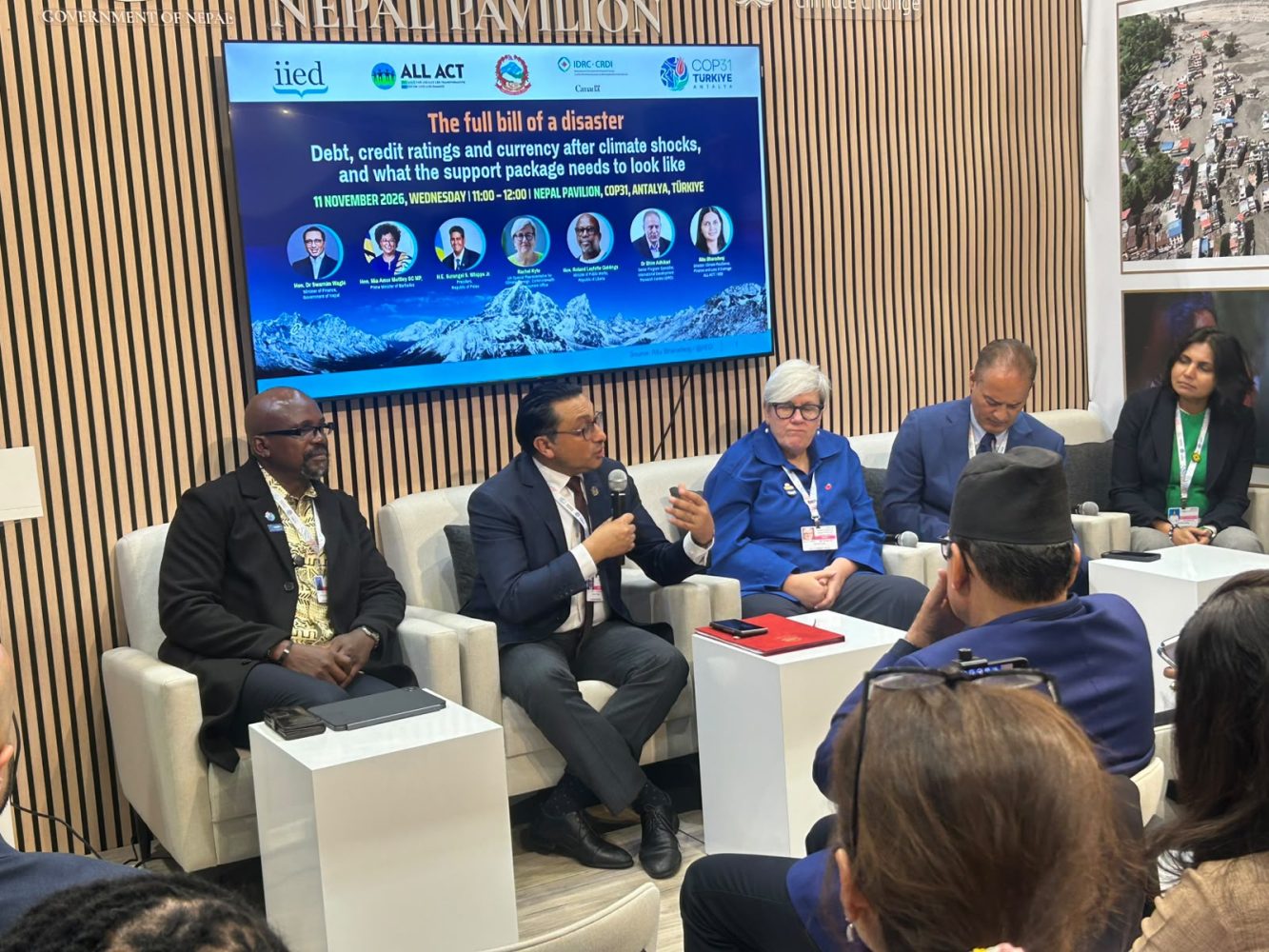

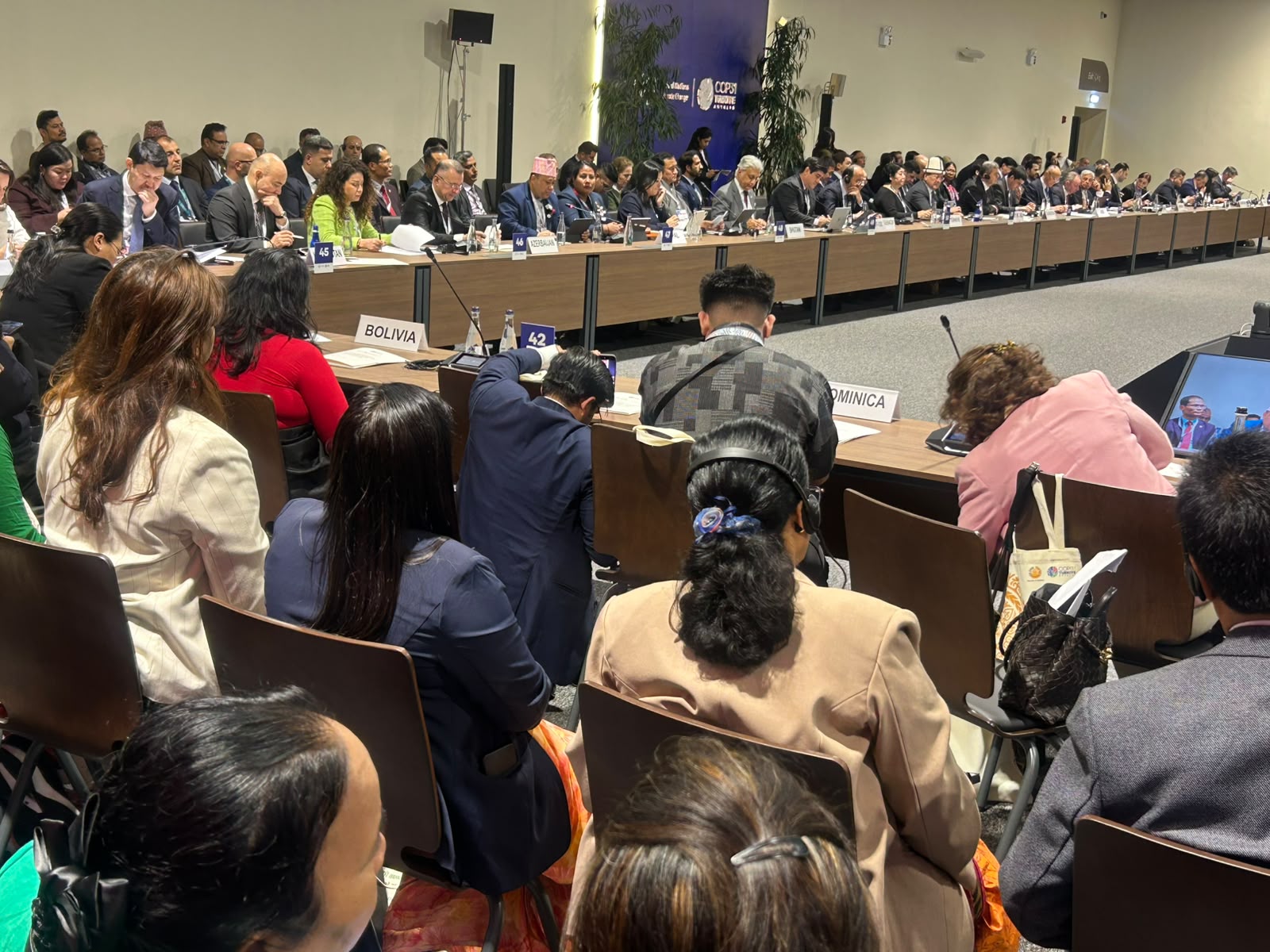
ANTALYA, Türkiye, 12 November – The Federation of Community Forestry Users, Nepal (FECOFUN) is at COP31 in Antalya to demand justice for the victims of the 26 August Bhote Koshi–Trishuli flash flood, which claimed 1,457 lives and caused Rs 408 billion in economic losses. Highlighting that Nepal contributes only 0.1 percent of global emissions yet faces severe glacial collapses, FECOFUN is urging industrial nations to cut emissions and establish a dedicated Mountain Compensation Fund.

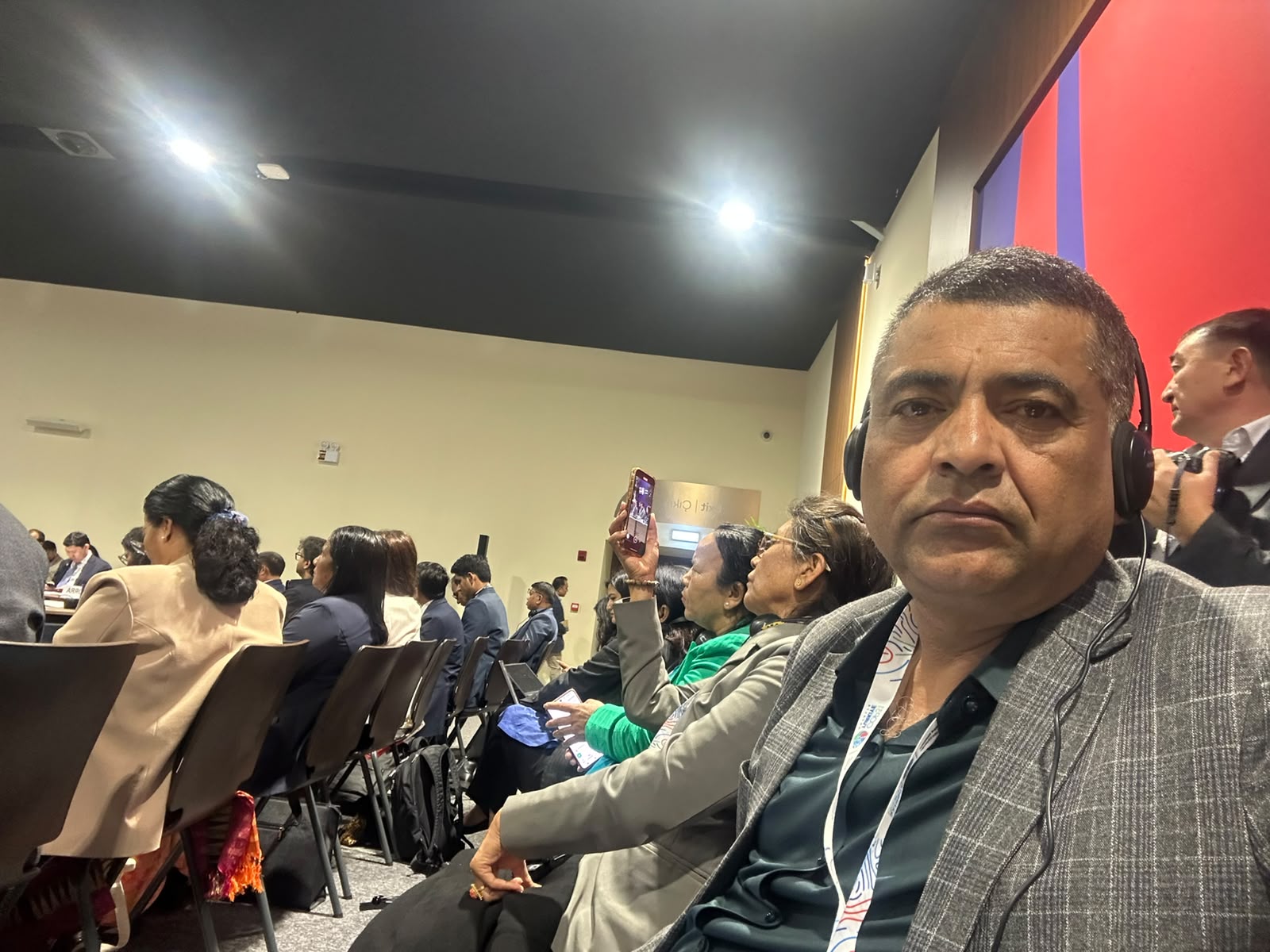
FECOFUN Chairperson Thakur Bhandari is attending the summit, which runs from 9 to 20 November, as part of the federation’s campaign “Community Voices in Global Forum.”
On the morning of 26 August 2026, the ground supporting a glacier gave way. Ice and rock crashed into the Bhotekoshi River and formed a temporary dam that subsequently burst. A surge of water, mud and boulders swept through Rasuwa, Nuwakot, Gorkha and Dhading, destroying homes, schools, bridges and power plants within hours.
 According to the National Disaster Risk Reduction and Management Authority (NDRRMA), as of October 2026, 1,457 lives were lost, 4,720 people were still missing, 7,570 houses were destroyed and 102 children were left without a parent. Damage and economic loss stand at Rs 408 billion, and US$4.7 billion is needed to recover and rebuild.
“Sympathy cannot restore a lost life, a village or a culture,” Bhandari said in a message published in the campaign brochure. “This is not an accident of geography; it is an injustice, and it demands accountability from the nations whose industry and consumption have driven this crisis.”

Funding gap
FECOFUN noted that the Loss and Damage Fund has approved US$20 million for Nepal, less than half of one percent of the estimated need.
Four demands
FECOFUN is appealing to the international community to:
- cut emissions now, noting that the Paris Agreement set a limit of 1.5°C above pre-industrial levels, while the planet was already 1.43°C warmer by 2025;
- invest in real and permanent solutions, including technical assistance and research on advanced early warning systems, climate-resilient infrastructure and additional support for community forestry;
- provide fair compensation, not charity, to communities that lost lives, homes and livelihoods; and
- establish a Mountain Compensation Fund and support affected communities.
Contribution and vulnerability
FECOFUN says Nepal’s more than 23,000 community forest user groups, representing 3.1 million households, manage 2.5 million hectares of forest. For four decades, it says, these communities have conserved forests and biodiversity that store carbon for the world. Nepal contributes only about 0.1 percent of global greenhouse gas emissions, yet its glaciers are collapsing and its valleys are being flooded, the federation says. It adds that a further 41 glaciers and their river valleys face the same threat.
Survivor turned responder
The campaign features Lilanath Neupane, Vice Chairperson of FECOFUN Bagmati Province, who was working deep inside a tunnel of the Trishuli hydropower project when the river broke loose. He crawled out over rock and through mud. The next morning he returned to the riverbank to support the search, coordinate forest user groups and assist families who had lost everything.
In September and October 2026, with the support of its partners, FECOFUN delivered rice, kitchen sets, clothing, beds, cooking and electric stoves, LP gas cylinders, stationery sets and school uniforms to flood-affected families.
“We do not ask for charity. Our communities and we demand justice,” the campaign states.